

Immersion Heaters Explained: A Complete Guide to Their Operation
If you’ve ever needed to heat up a huge tank of water, whether at home or in a big factory, you’ve likely come across the term Immersion Heater. It sounds a bit technical, but the concept is actually really simple. Think of it like a giant electric heating element that sits right inside the liquid.
Instead of heating a tank from the outside (which wastes a lot of energy), these heaters are dropped directly into the fluid. This “direct contact” is exactly why they are so fast and efficient. There’s no heat lost to the air; it all goes straight into the liquid. In this guide, we will explain how they work, their types, and the benefits of immersion heaters.
What is an Immersion Heater?
It is basically an electric rod or coil that goes directly into water or another liquid to heat it. When electricity passes through it, the rod becomes hot, and this heat goes straight into the liquid. Unlike other heaters that work from outside the tank, immersion heaters sit inside the liquid. That’s why they heat up quickly. You’ll find them in water tanks, industrial boilers, or even in large containers where fast heating is needed.
How an Immersion Heater Works
The operation is quite straightforward:
- First, place the heater in a container filled with liquid.
- Switch it on. Electricity flows through the metal coil or rod.
- The rod heats up due to electrical resistance.
- Heat is transferred directly to the surrounding liquid.
- A built-in thermostat usually switches it off automatically once the desired temperature is reached.
Types of Immersion Heaters
Depending on how they are attached to the tank, you’ll usually see three main styles:
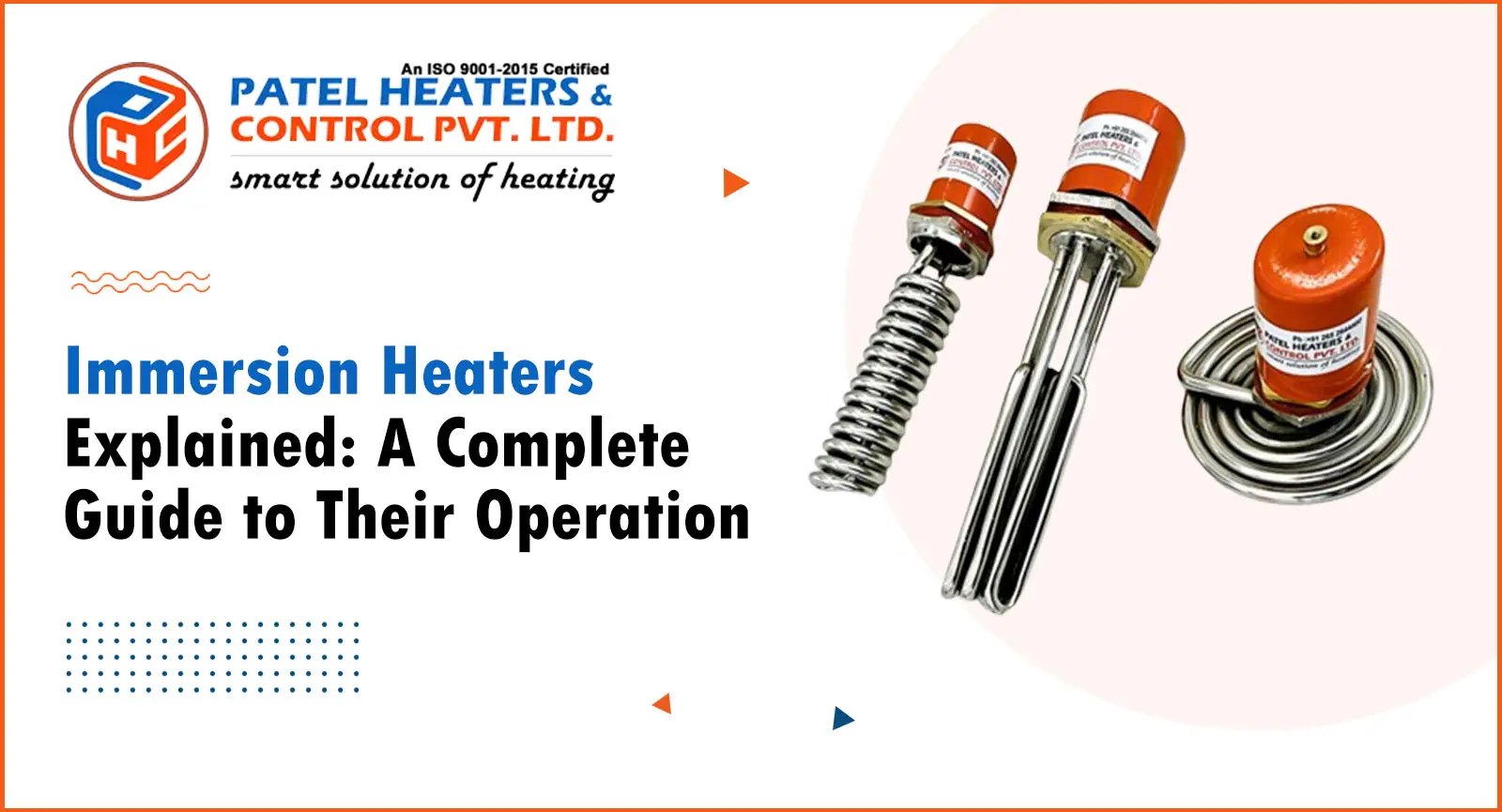
Screw-Plug Heaters:
These screw directly into a threaded hole in the side of a tank. They are great to heat liquids in smaller containers like storage tanks or boilers.
Flanged Heaters:
These are bolted onto a matching flange on the tank to heat a large volume of liquids. You’ll see these heaters in big factories or heavy-duty settings.
Over-the-Side Heaters:
These heaters hang over the side of a container and are often used for temporary heating.
Water Immersion Heater:
These are mainly used to heat water in storage tanks, geysers, boilers, and industrial water systems.
Oil Immersion Heater:
These are designed to heat oils and other viscous fluids. These are widely used in industries where oil needs to be maintained at a specific temperature for smooth operation.
Benefits of Immersion Heaters
There are many reasons why these heaters are preferred across industries. Some key benefits include:
Efficiency is Key:
Since the heat is released directly into the liquid, you get nearly 100% efficiency. There’s no heat loss which saves your money on energy bills.
It Heats Up Fast:
You don’t have to wait for a boiler to warm up pipes. It’s a direct, instant process as heat is transferred directly to the heating medium.
Low Maintenance
Compared to complex boiler systems with many moving parts, immersion heaters are relatively simple. There are no pumps or complicated valves to worry about. If the element eventually wears out, it’s usually easy and affordable to replace.
Easy Installation
These heaters can be fitted into almost any tank or container. Whether it’s a small domestic cylinder or a massive industrial vat, there is a size and shape that fits.
Conclusion
If you are looking to buy high-quality Immersion Heater solutions, Patel Heaters is a good brand. We are a manufacturer and supplier of customized heating solutions. Our heaters are made with top-tier materials that don’t rust or corrode easily, which saves you a lot of money in the long run. Visit our product section to look at the industrial heater options and find the perfect fit for your setup!

Patel Heaters
Patel Heaters and Control has immense expertise in the manufacturing of Industrial heaters and heating elements. We have been providing heating solutions to our clients since 1982.