



Duct Heater
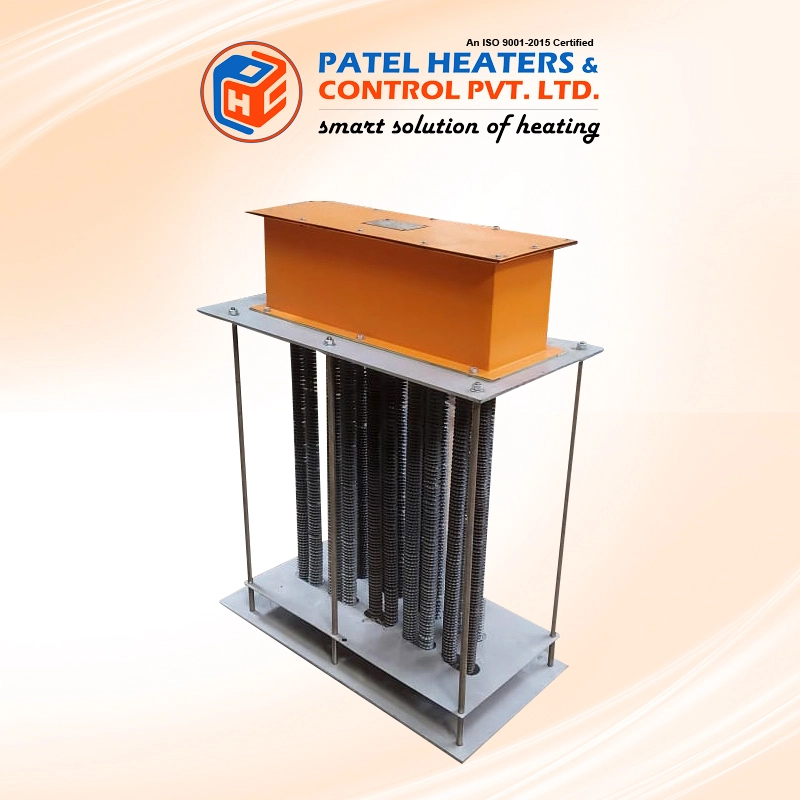
We offer Duct Heater which are designed in rugged and efficient manner. These heaters have the capability to heat large amount of air.
It contains the special feature to warm up as well as cool down the air within a period of time. This kind of industrial heater is designed in a very versatile manner which has the features to use in any commercial and industrial applications. You can find a range of option in size, and specification which are designed in single as well as three phase volts. This enables our clients to choose the one which perfectly blends with their needs and requirement.

For Your Service
(+91) 992-582-2226




Features Of Our Product
- Unique construction design
- Excellent performance under challenging circumstances
- Made from premium quality raw materials
- Use of advanced technology
- Long service life
- Available in different configurations with wide temperature resistant range

Applications
- Air Drying/Curing Operations
- Booster Air Heater
- Breaking Resistor
- Core Drying
- Dehumidification
- Forced Air Comfort Heating
- Heat Treating
- Make-Up Air Heating
- Re-Heating
- Resistor Load Banks
Know More
Experience The Optimal Heating with Our High Grade Duct Heater
These heaters are specifically designed to deliver low pressure drops and does not make use of excessive temperature. It contains low static pressure which enable you to use economical blowers. We being one among the leading manufacturers and suppliers of industrial heaters see to it that our customers are been benefitted with the most advanced features in the products we offer them. You can anytime place your enquiry with us.
Ordering Info. Required
- Duct size
- Air flow velocity
- Breaking Resistor
- Inlet and outlet temperature
- Wattage, voltage and phase
- Number of circuits
- Element watt density
- Element sheath material
- Mounting flange material
- Insulation thickness
- Electrical enclosure type
- Over-temperature thermocouple, if required
- Any other modifications

Process air duct heater

Heavy wall Incoloy tubular
Heavy wall Incoloy tubular heating elements (field replaceable) provide protection against corrosive air environments and resistance to vibration when compared to open coil elements

Air duct heaters
Air duct heaters can be designed specifically for high pressure and/or hazardous locations. Turnkey systems including the duct heater, power and temperature control panel, and the temperature and over-temperature sensors can also be provided.
Consult us with Your Requirements
NEMA equivalent terminal box enclosure with vented cover to help keep wiring cooler. Optional enclosures: (moisture resistant), (explosion resistant) and (dust resistant).
3-1/2 inches (89 mm) of Cerawool insulation in an aluminized steel enclosure minimizes heat losses while keeping the electrical wiring cooler.
The heavy duty frame is composed of a thick steel mounting flange, stainless steel support plate and corner posts to securely hold the heating elements rigid in any mounting position.
Field replaceable elements are held in place by a single screw quick release clamp. into the terminal enclosure.
1/4 inch (6 mm) inside diameter thermowell accessed through a 1/8″ NPT tapped hole in the flange allows installation of an optional Type J or K thermocouple for sensing the element temperature. An excellent safeguard for your system.
Elements are .430 inch (11 mm) diameter and have Incoloy sheaths for excellent corrosion resistance and scaling resistance at high temperatures.
Typical Applications
- Air Drying/Curing Operations
- Booster Air Heater
- Breaking Resistor
- Core Drying
- Dehumidification
- Forced Air Comfort Heating
- Heat Treating
- Make-Up Air Heating
- Re-Heating
- Resistor Load Banks
Please Specify the following
- Duct size & Air flow velocity
- Inlet and outlet temperature
- Wattage, voltage and phase
- Number of circuits
- Element watt density
- Element sheath material
- Mounting flange material
- Insulation thickness
- Electrical enclosure type
- Over-temperature thermocouple, if required
Frequently Asked Questions
Too slow and the elements overheat because the air is not carrying heat away fast enough. Too fast and the air exits before picking up enough heat. Wattage and watt density need to match your actual air flow velocity. That is why we ask for it when specifying a duct heater.
Duct size, air flow velocity, inlet and outlet temperature, wattage, voltage and phase, number of circuits, element watt density, sheath material, flange material, insulation thickness, enclosure type, and whether an over-temperature thermocouple is needed.
Usually the element density inside the duct is too high, creating resistance to air flow. Our duct heaters are designed for low static pressure drop to allow economical blowers rather than high-pressure fans. If the drop is high, the heater may not have been correctly specified for your duct size and flow rate.
Yes. The terminal box is available in moisture-resistant, explosion-resistant, and dust-resistant configurations. Specify the hazardous area classification at the time of ordering so the right enclosure is supplied.
High air velocity, turbulent flow, or inadequate element support are the common causes. Vibration causes fatigue at support points over time. Our duct heaters use heavy wall Incoloy elements with stainless steel support plates to keep elements rigid in any mounting position.
Yes. Elements are field replaceable using a single screw quick release clamp. No need to remove the full unit from the installation. Downtime stays short.
11mm diameter Incoloy sheath. Incoloy resists corrosion and scaling at high temperatures and handles thermal cycling better than standard steel, which matters in process air applications where moisture or corrosive elements may be present.
The terminal box has a vented cover and the unit uses 89mm of Cerawool insulation in an aluminized steel enclosure, which minimises heat transfer toward the electrical wiring side of the unit.
Yes. A thermowell accessed through a tapped hole in the flange accepts an optional Type J or K thermocouple for element temperature sensing. This can be wired to cut power if the element temperature exceeds a safe limit.
Air drying and curing, booster air heating, core drying, dehumidification, forced air comfort heating, heat treating, make-up air heating, re-heating, and resistor load banks. Single and three phase configurations are available.