


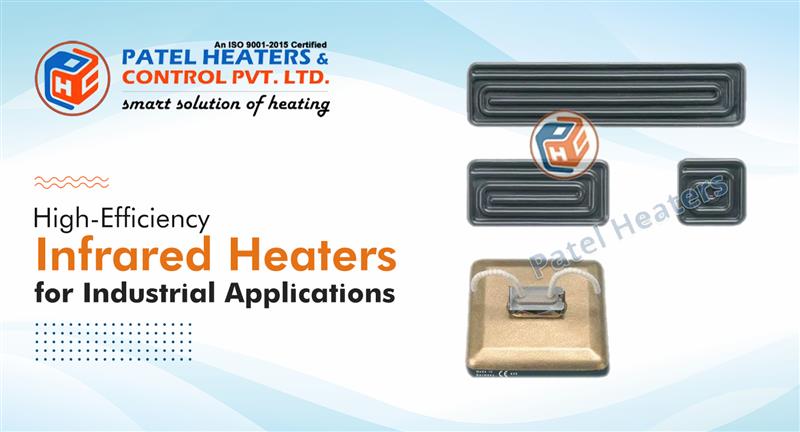
High-Efficiency Infrared Heaters for Industrial Applications
As the demand for green heating choices grows in the world and government incentives encourage a move toward reduced emissions, there has never been a better moment to invest in cost-effective heating solutions. However, infrared heaters should be regarded as a practical and desired option for anybody looking to transition to environmentally friendly heating systems. This post will explain how infrared heaters work, their benefits, and more.
What is an infrared heater?
An infrared heater is essentially a fairly new vice in the residential heating landscape, and it functions in a drastically different method than classic heating systems that employ convection to warm up. Infrared radiators heat an object directly through direct heat transfer rather than wasting energy by heating the surrounding air.
Infrared heaters allow consumers to reduce their total energy consumption levels, potentially lowering heating expenses, because they may perform with a considerably better degree of efficiency than components that rely on traditional electric or gas boilers.
Infrared heaters, which have recently gained prominence as an economically friendly heating alternative, are expected to grow in popularity in the future years, especially as the UK gas boiler ban takes effect.
What is infrared heating?
To fully grasp how infrared panel heaters or radiators function, it is helpful to understand the several types of heat transmission—radiant heating, convection, and conduction.
Infrared heaters use radiant heating to provide heat directly to things and people, rather than heating the air in between. Infrared heating can be classified as ‘near’ or ‘far.’
Near infrared heat is near and powerful, with the potential to be dangerous. Far infrared heat must be transmitted to a specific region at a considerably lower intensity in order to offer a safe heating source. This is the type of infrared heating technology utilized in the creation of current infrared radiators and panels, which are becoming increasingly popular.
How does an infrared heater work?
IR heaters emit infrared radiation, which is transported through the air before reaching an item or a person. The person or thing absorbs the radiation, causing chemical vibrations that generate heat. In addition to directly heating the item, these vibrations re-emit the warmth into the area, recycling the heat.
Infrared heaters heat individuals by absorbing infrared rays approximately an inch deep into their bodies, providing a safe and comforting experience.
While infrared radiators may run on oil or gas, this would negate their function as a cost-effective heating option. Furthermore, using electricity makes life much easier because it eliminates the need for invasive plumbing work or pipe network adjustments.
Furthermore, infrared heaters take three to five minutes to fully heat up after being plugged in, so it does not take long to effectively warm a specific person or object in a room.
Advantages of an Infrared Heater
Energy efficiency—Infrared heaters are extremely efficient because they heat people or items directly rather than wasting energy by warming the air in between. The infrared radiation also transmits immediately, so you don’t have to wait to feel warm.
Reduce emissions—Because infrared radiators do not utilize fossil fuels to generate energy, they may significantly reduce home emissions quickly. This sort of radiator may also be utilized in conjunction with renewable energy solutions to provide the ultimate green heating alternative.
Easy maintenance – Because infrared heaters have no moving parts, the likelihood of wear and tear is significantly reduced. As a result, they may operate with less maintenance because there is no engine to worry about, no air filters to repair, and no need for lubrication. To keep your infrared radiators in good working order, all you need to do is clean them every now and again.
Hassle-free heat retention– Infrared heaters can hold heat more quickly and easily than a standard central heating system, which is prone to heat leaving through draughts through open windows or doors.
Conclusion
As infrared technology advances, a new generation of elegant infrared radiator designs will rule the market. Patel Heaters already has a large assortment of ultra-modern infrared heater types suitable for upgrading any house. If you have any questions regarding our infrared heater collection or need further assistance, please do not hesitate to contact our helpful team.

Patel Heaters
Patel Heaters and Control has immense expertise in the manufacturing of Industrial heaters and heating elements. We have been providing heating solutions to our clients since 1982.