



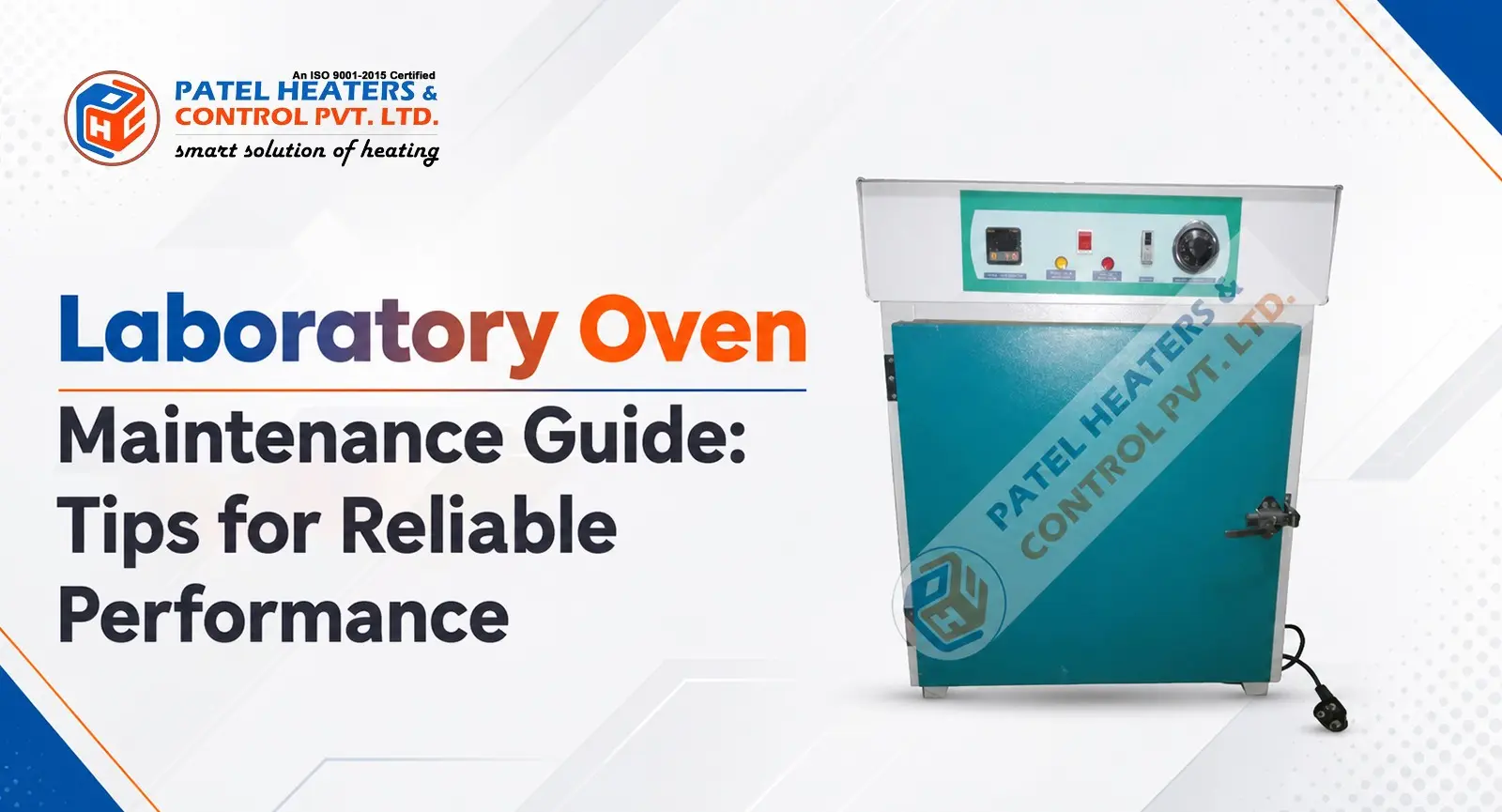
What Is a Laboratory Oven?

A laboratory oven is an enclosed heating chamber that provides a steady, controlled temperature for scientific and industrial work. Most models run from room temperature up to about 250°C, though higher ranges are available. The two common styles are the gravity convection oven, where heat rises naturally, and the forced air oven, where a fan circulates hot air for better temperature uniformity.
You will find these ovens in research labs, pharmaceutical units, food testing centres, electronics workshops and quality control departments. They are used for drying glassware, removing moisture from samples, heat treatment, and sterilisation of tools that can handle dry heat.
Why Lab Oven Maintenance Matters
Many labs treat the laboratory oven as a simple box that just works. That thinking causes trouble later. A poorly kept oven can give uneven heat, which affects test results and wastes samples. It can also use more power, break down in the middle of a batch, or become a safety risk.
Regular upkeep helps you:
- Get accurate and repeatable results
- Lower your energy consumption
- Avoid unplanned downtime
- Extend the working life of the equipment
- Meet audit and quality requirements
A few minutes of care each week is much cheaper than a major repair or a ruined experiment.
Daily and Weekly Maintenance Checklist
Small habits make the biggest difference. Make them part of the lab routine.
Daily:
- Wipe spills inside the chamber once it has cooled down
- Check that the door closes fully and the door gasket is not damaged
- Make sure the vents are not blocked
- Confirm the display and digital temperature controller are working normally
- Do not overload the shelves, as air needs space to move
Weekly:
- Clean the stainless steel chamber with a soft cloth and mild detergent
- Take out the shelves and clean them separately
- Look for rust spots, dust or residue near the heating area
- Check the power cord and plug for wear or heat marks
Never use harsh chemicals or steel wool on the inner surface of laboratory oven. They can scratch the steel and cause corrosion over time.
Monthly and Yearly Maintenance
Deeper checks keep hidden problems from growing.
Monthly:
- Inspect the heating elements and wiring for discolouration
- Clean the fan blades in a forced air oven to remove dust
- Check the exhaust damper and make sure it moves freely
- Test the over-temperature protection or safety cut-off
Yearly:
- Get a full service by a trained technician
- Check the insulation inside the walls for damage
- Review electrical connections and tighten loose ones
- Replace worn gaskets, switches or thermostat parts
- Complete a professional calibration and keep the record
A written maintenance log is a good habit. It shows when each task was done and helps you spot patterns before they become failures.
Common Problems and Easy Fixes
Here are the issues lab staff report most often in laboratory ovens.
- Oven not heating: Check the power supply, fuse and controller settings first. If those are fine, the heating element may need replacing.
- Uneven temperature: This usually points to overloaded shelves, a blocked vent or a failing fan. Rearrange the load and clean the air path.
- Temperature keeps fluctuating: The sensor or controller may be faulty or out of calibration.
- Door will not seal: A worn gasket lets heat escape. Replacing it is quick and inexpensive.
- Strange smell or smoke: Switch the oven off and let it cool. Spilled material or burnt residue is the common cause. Clean it before using it again.
- Display shows an error: Note the code, turn the unit off and on once, and contact the supplier if it continues.
If a problem repeats after a basic fix, do not keep using the oven. Call a technician.
Safety Practices You Should Follow
A laboratory oven is not built for every material. Following a few rules protects people and equipment.
- Never heat flammable or explosive substances, such as solvents, in a standard oven
- Use heat-resistant gloves while loading and unloading
- Keep the area around the oven free of paper, plastic and chemicals
- Do not block the ventilation openings
- Allow the oven to cool before cleaning
- Place a clear label on the door showing the set temperature and operator name
- Make sure the oven is properly earthed
If your work involves solvents or volatile samples, a vacuum oven or an explosion-proof model is the right choice, not a regular one.
Mistakes That Shorten Oven Life
Even good equipment fails early when it is handled wrongly. Avoid these habits:
- Opening the door often during a cycle, which causes heat loss and stress on the heater
- Setting the temperature higher than the rated limit
- Placing items directly on the chamber floor
- Skipping routine cleaning because the oven “looks fine”
- Ignoring small warning signs like noise, smell or slow heating-up time
- Using the oven in a damp or dusty room
Choosing a Reliable Laboratory Oven for Your Needs
Lab managers, institutions and bulk buyers should confirm these details before ordering a lab oven.
- Chamber capacity: choose a size that suits your usual batch, with some room to spare.
- Temperature range and accuracy: check the maximum limit and the stated uniformity.
- Construction material: stainless steel interior resists corrosion and is easy to clean.
- Calibration certificate: ask for it with every unit.
- Customisation: special sizes, shelf layouts or temperature ranges for specific processes.
- Spare parts and service: easy access to heaters, sensors and controllers matters over the years.
- Warranty and installation support: useful for institutional and bulk orders.
A slightly higher price is often worth it when the oven holds its accuracy for years.
Conclusion
A laboratory oven is a simple machine, but its accuracy decides the quality of the work done inside it. Daily cleaning, regular calibration and sensible loading habits keep it dependable and safe. Choosing the right size, type and build quality at the start also saves trouble later.
If you are looking for this industrial oven, you can buy it from Patel Heaters.It is a manufacturing company that makes customized industrial ovens according to your needs such as size changes or temperature ranges.
Frequently Asked Questions

Patel Heaters
Patel Heaters and Control has immense expertise in the manufacturing of Industrial heaters and heating elements. We have been providing heating solutions to our clients since 1982.
