



Tubular Heater
Patel Heater & Control Pvt Ltd is proud to present highly advanced Tubular Heaters in India.
We develop high performing Tubular Heaters that are designed at our in house facility keeping in mind the requirements of our customers and meeting them using latest technology solutions. Made from superior quality raw materials, our Tubular Heaters have sturdy construction and unique design that makes them perform better compared to its competitors.

For Your Service
(+91) 992-582-2226


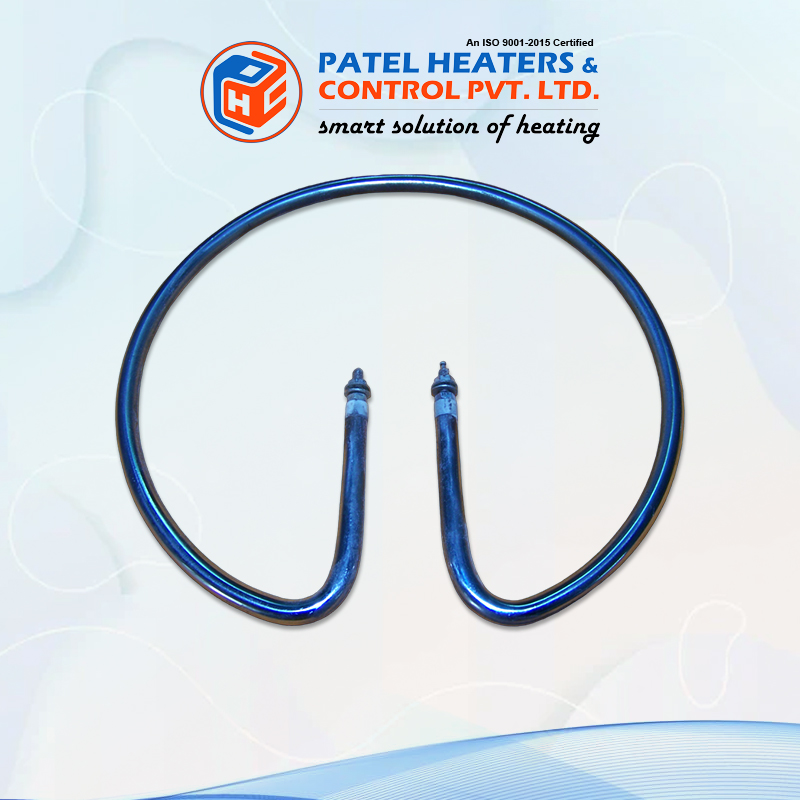
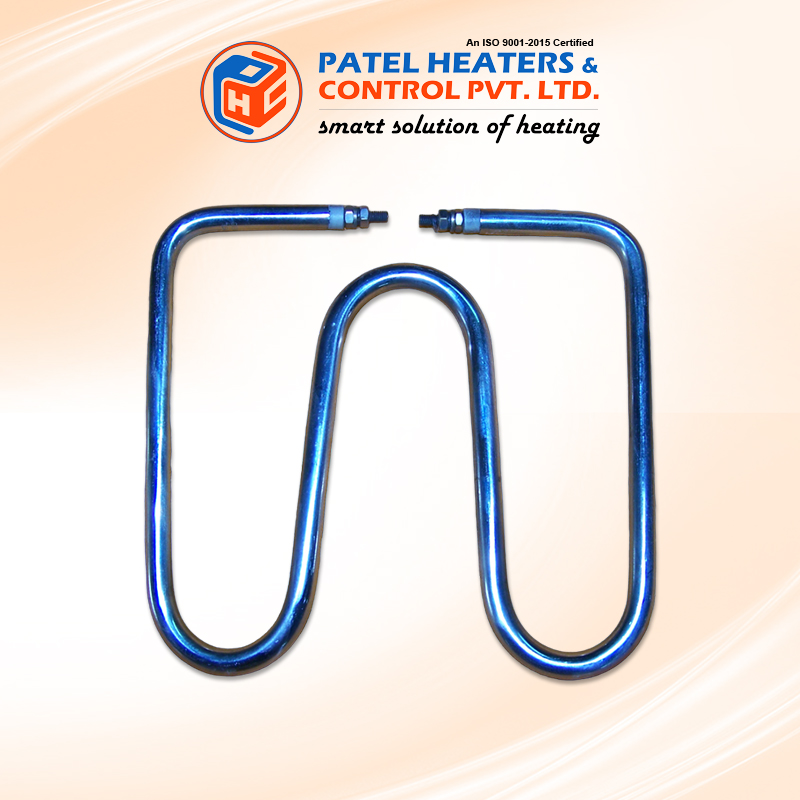


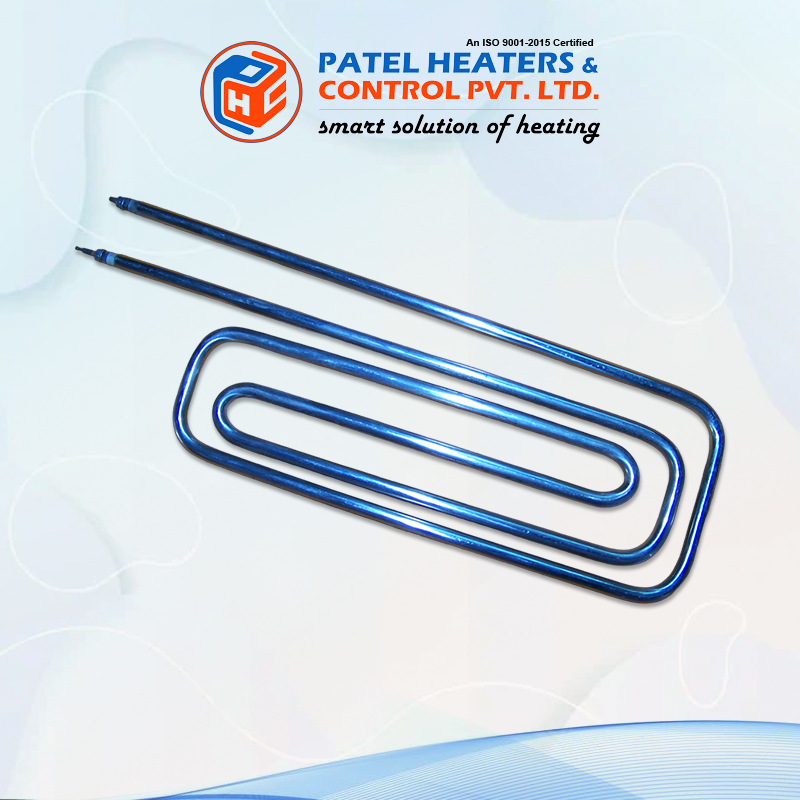
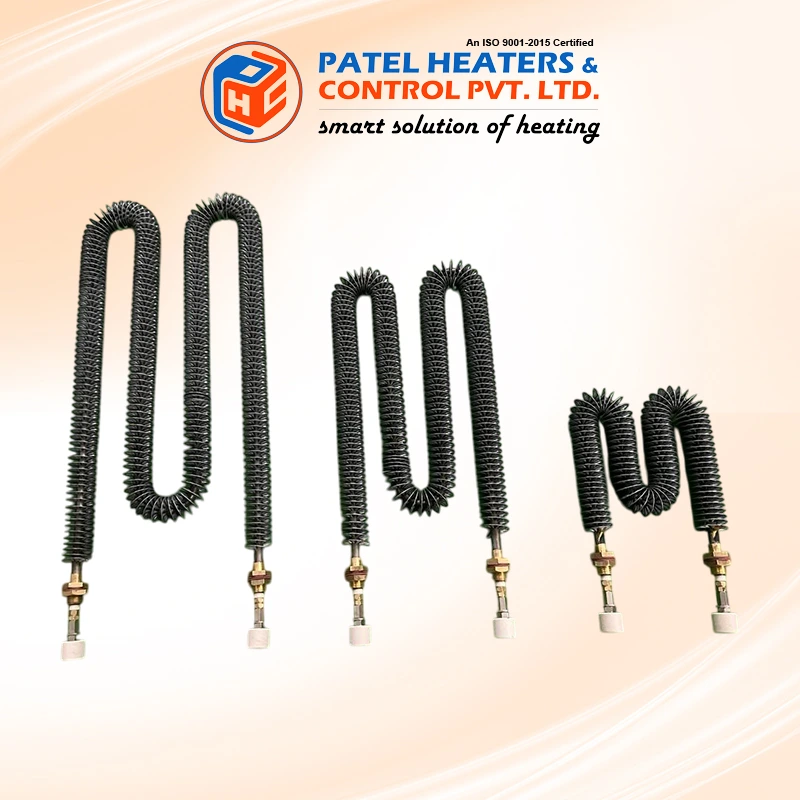
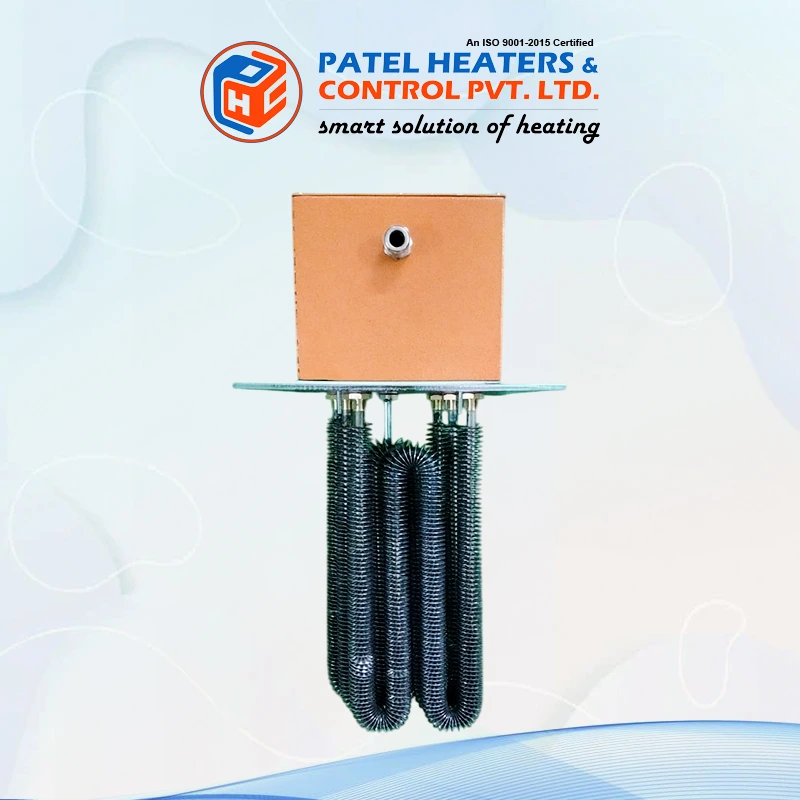


Features Of Our Product
- Available in wide variety of ratings, shapes and sizes
- Made from superior quality raw materials
- Can be transformed to fit any construction design
- Advanced Technology

Applications
- Forced air heating
- Comfort radiant heaters
- Combination radiant and convection heater for ovens and dryers
- Welded, brazed or clamped to tanks and pipes
- Hot runner molds
- Direct immersion in liquids
- Thermal forming machines
Know More
Enhance Your Industrial Processes With Innovative Tubular Heater
Ordering Info. Required
- Volt & Wattage Require
- Dia & length of the heater Require
- Terminal Type & Shape of heater
- Bushing or other option
- Application information including process temperature, Material being heated, corresive condition
- Effective Heating Length Required
- Drawing or photo if available
Construction Characteristics
PHC Tubular Heaters are the most versatile and widely used source of electric heat for industrial, commercial and scientific applications. They can be designed in a wide range of electrical ratings, diameters, lengths, terminations, and sheath materials. Important and useful characteristics of tubular heaters are that they can be formed into virtually any shape, brazed or welded to any metal surface, and cast into metals. Carefully researched manufacturing methods and quality materials have made PHC tubular heaters stand apart from other heating elements claiming similar performance.
We have hight standards and take pride in all we do
Typical Applications
- Forced air heating
- Thermal forming machines
- Direct immersion in liquids
- Comfort radiant heaters
- Welded, brazed or clamped to tanks and pipes
- Hot runner molds
- Combination
- radiant and convection heater for ovens and dryers
Watt Density
Element Watt Density is the wattage dissipated per square inch of the element sheath surface and is critical to the proper heating of the application and to the life expectancy of the heater. The Watt Density is calculated with the following formula:
- Many materials are heat sensitive and can decompose or be dam- aged if the element is running too
- Air and other gases that are poor conductors of heat require watt densities matched to the velocity of the gas flow to prevent element
- When heating hard water or cleaning solutions mineral deposits can build up on the element sheath, acting as a heat insulator and raising the internal element If these deposits cannot be periodically removed, use a lower watt density element to increase heater life expectancy.
Standard Tubular Heater Terminations
Select the termination style that meets your requirements for space, accessibility and reliability.
Note: If the listed terminations do not seem to fit your requirements, call us and let us design one that will.
TYPE TS—STANDARD
Threaded stud terminal with ceramic insulator. Standard thread size is 6-32 for .260″ (6.6 mm), 8-32 for .315″ (8 mm), .335″ (8.5 mm) and .375″ (9.5 mm), and 10-32 for all other diameters. Other thread sizes and lengths are available as par Requirement.
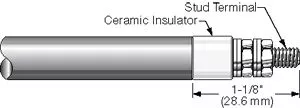
TYPE TM

Type P – Plain Pin

TYPE L1 TERMINATION– Screw lug terminal 90°.

Type L – Terminal Lug type.

TYPE D TERMINATION– Quick connect. Maximum 240V
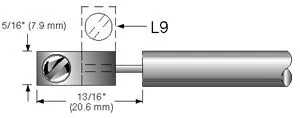
TYPE D1 TERMINATION– Quick connect 90°. Maximum 240V

Type MR– Moisture resistant shrink strain relief and lead wire with or without stainless steel overbraid.
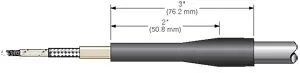
| Type | Insulation | Max. Temperature | Volts |
| WS | Silicone | 390°F (200°C) | 600V |
| WF | Fiberglass | 480°F (250°C) | 600V |
| WM | Mica/Glass | 840°F (450°C) | 600V |
Termination and Mounting Method
TYPE W MOUNTING– Locator washers

TYPE P MOUNTING-Mounting bracket
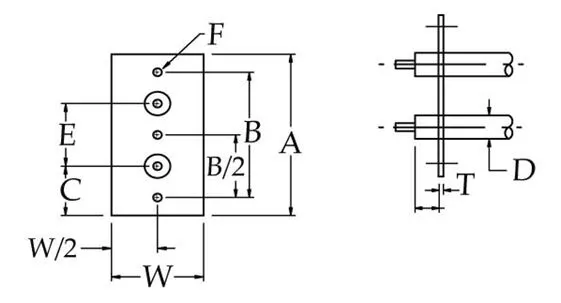
TYPE F MOUNTING– Threaded bulkhead fittings

TYPE F MOUNTING– Threaded bulkhead fittings
TYPE T MOUNTING– Threaded bulkhead fittings

Tubular Sheath & Watt Density Guidelines
| Heated Medium | Process Temperature °F (°C) | Sheath Material | Max. Watt Density W/in2 (W/cm2) |
| SOLIDS | |||
| Clamp on to Metal | To 500 (260) To 1000 (540) | Incoloy® | 20 (3) 10 (1.5) |
| Milled Groove Molds | To 500 (260) To 1000 (540) | Incoloy® | 60 (9) 30 (4.5) |
| Vacuum Platens | To 650 (345) To 1000 (540) | Aluminum, SS Incoloy® or Inconel® | 40 (6) 20 (3) |
| LIQUIDS | |||
| Clean Potable Water | To 212 (100) To 500 (260) | Copper Incoloy® | 60 – 90 (9 – 14) 30 – 40 (4.5 – 6) |
| De-I Water | To 212 (100) | 316SS | 60 (9) |
| Process Water & Very Diluted Corrosives | To 200 (95) | 304SS or Incoloy® | 48 (7.5) |
| Mild or Diluted Acids & Alkalies | To 200 (95) | Incoloy®, 316SS or Inconel® | 15–23 (2.3 – 3.5) |
| Oils (Depends on Type & Use) | 50 – 600 (10-315) | Steel | 6 – 23 (1 – 3.5) |
| AIR | |||
| Ovens, Natural Convection | To 700 (370) To 1200 (650) | Incoloy® | 30 (4.5) 10 (2.3) |
| Flowing Air @ Min. 500 fpm | To 800 (425) To 1000 (650) | Incoloy® | 30 (4.5) 23 (3.5) |
Maximum Recommended Sheath Temperatures
| Sheath Material | Maximum Temperature in Air °F (°C) | Typical Aplications |
| Standard Available Sheath Materials | ||
| Copper | 350 (175) | Clean, potable water heating |
| Aluminum | 750 (400) | Vacuum platens |
| Steel | 750 (400) | Oils, glycol, molten salts, non-corrosives |
| SS304 | 1200 (650) | Improved corrosion resistance over steel |
| SS316 | 1200 (650) | De-ionized water and some corrosives |
| Incoloy® 840 | 1600 (870) | Improved corrosion resistance over steel and 304SS |
| Incoloy® 800 | 1600 (870) | Improved resistance to chloride attack, other corrosives |
| Other Available Sheath Materials | ||
| SS321 | 1200 (650) | Improved corrosion resistance over steel and 304SS |
| Incoloy® 825 | 1600 (870) | Highly resistant to many acids, salts, and other media |
| Inconel® 600 | 1800 (980) | Highly resistant to many acids, salts, and other media |
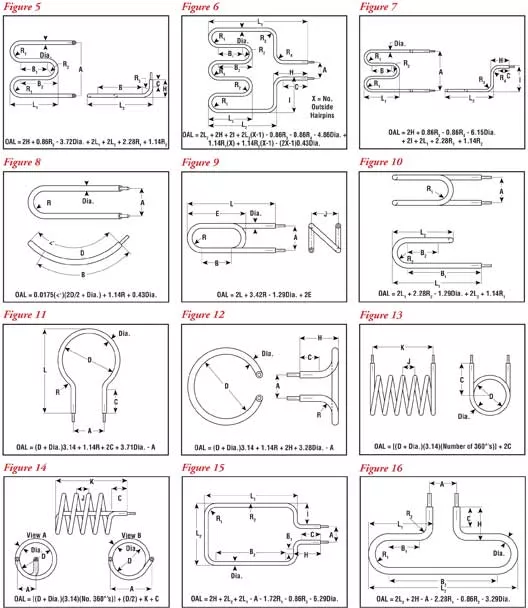
Typical Bandings

Frequently Asked Questions
Tell us the voltage and wattage, diameter and length, and terminal type and shape you need. Also mention the process temperature, the material being heated, and whether corrosive conditions are involved. A drawing or photo helps too, if you happen to have one on hand.
It’s the wattage dissipated per square inch of the element’s sheath surface. Get it wrong, and either the material you’re heating decomposes from too much heat, or the element wears out faster than it should. Getting the watt density right is really what decides how long the heater lasts.
Quite a few, depending on what you’re heating: copper for clean water, steel for oils and non-corrosives, SS304 or SS316 for better corrosion resistance, and Incoloy or Inconel for tougher, more corrosive conditions. Tell us the medium and we’ll match the sheath accordingly.
Yes, that’s actually one of its biggest advantages. It can be formed into virtually any shape, welded or brazed to metal surfaces, or even cast directly into metal. So instead of adjusting your setup, the heater gets built around it.
Several types are TS threaded stud, TM mica stud, plain pin, screw lug at 90°, terminal lug, and quick connect for lower voltage setups. If none of these fit your requirement, mention it anyway; custom terminations can usually be worked out too.
Scale or mineral buildup on the sheath is the usual reason, especially if you’re heating hard water; that layer acts as insulation and pushes internal temperatures up. Check the sheath and clean off any deposits. If the heater’s still underperforming, the watt density may not match your application anymore.
Yes, though the sheath material has to be right for it. Mild acids and alkalies usually pair well with Incoloy, 316SS, or Inconel; stronger corrosives need a lower watt density too, since pushing high output through a harsh medium wears the heater out faster.
Watch for scale buildup; hard water and cleaning solutions are the usual culprits, and clean the sheath periodically. Check the terminations for wear now and then. Never run the heater dry or without proper contact; that alone pushes internal temperatures past what the element’s built for.
Yes, it works well in forced-air heating, ovens, and dryers running on natural convection. One thing to watch, the watt density needs to match the air velocity. Poor airflow around the element causes overheating faster here than it would in a liquid application.
Yes, both are fairly common requests. Hot runner molds usually get the heater cast or milled straight into the mold groove; direct immersion depends more on picking the right sheath material for the liquid. Share your application and we’ll configure it from there.