


Introduction
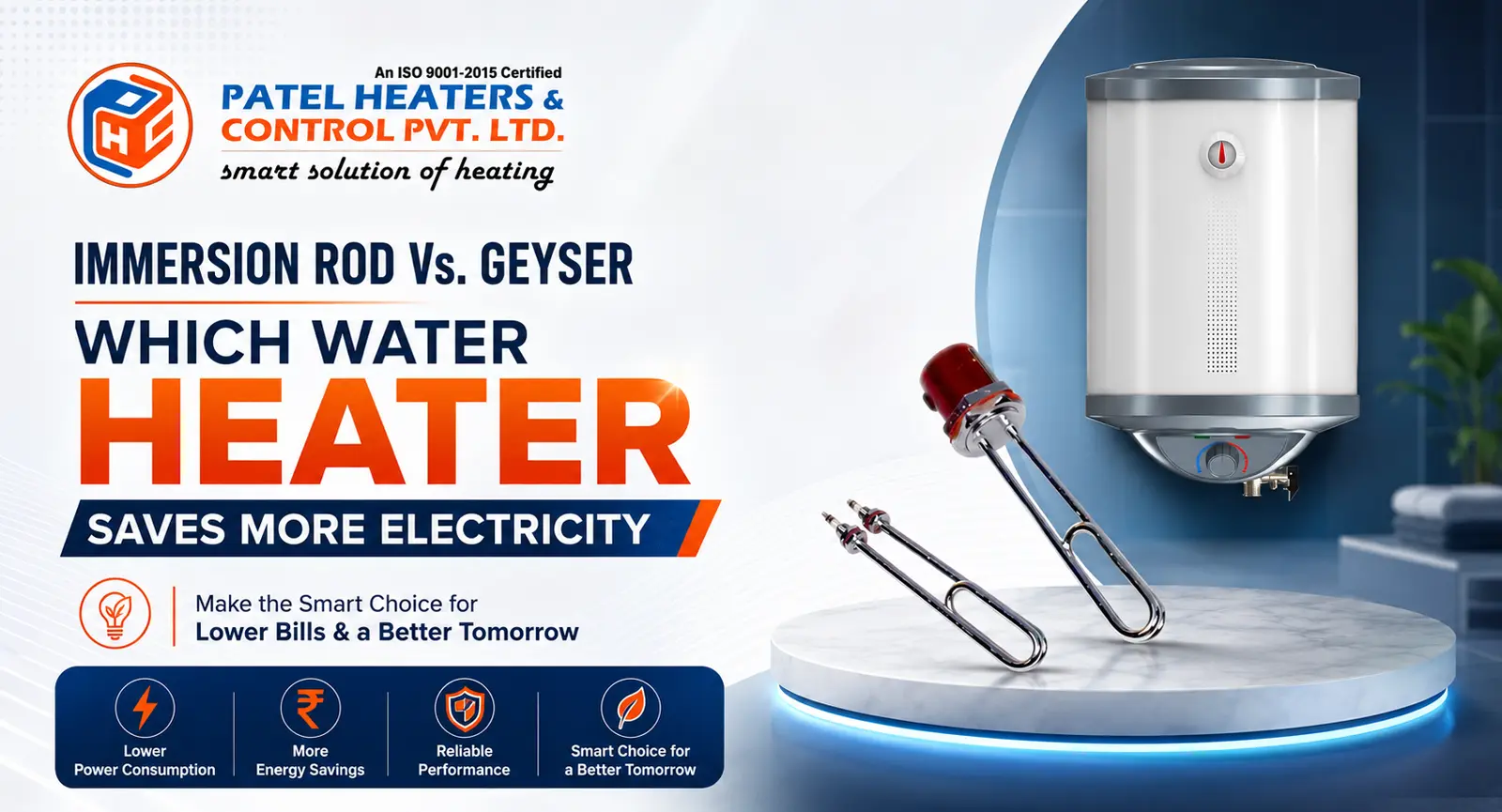
This comparison comes up in almost every household and small business trying to cut down on electricity bills. Both devices do the same basic job, heating water, but they’re built around different principles, and that’s exactly why one tends to save more electricity than the other depending on the situation.How an Immersion Heater Works vs How a Geyser Works?
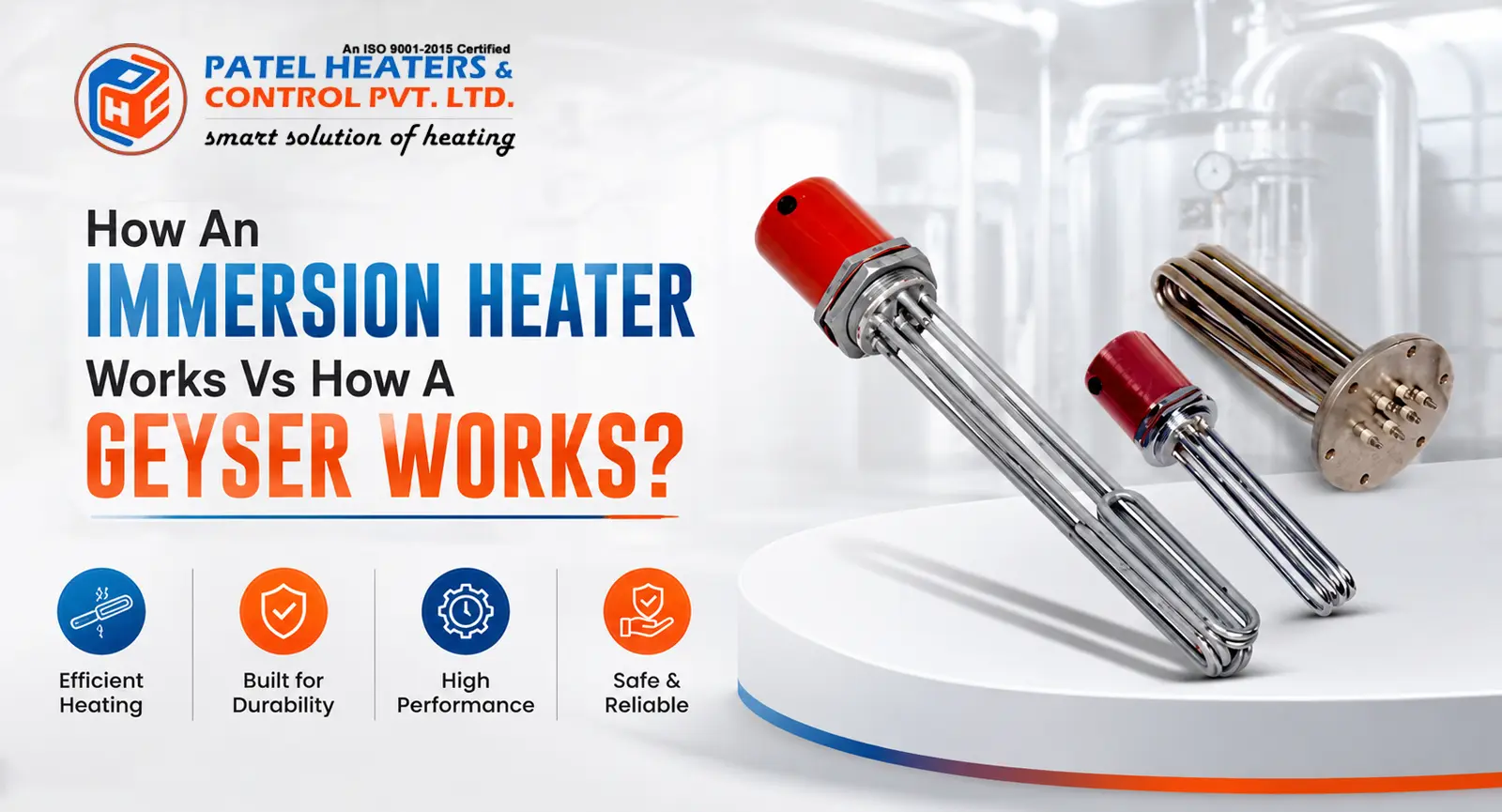 An immersion heater is a simple heating element, usually inserted directly into a bucket, tank, or container of water. It has no storage tank of its own. It heats exactly the amount of water it’s placed into, for exactly as long as it’s switched on, and nothing more.A geyser works differently. It has a built-in storage tank that holds a fixed volume of water, usually kept hot and ready at all times. Even when nobody is using hot water, the geyser’s thermostat kicks the heating element on periodically to keep that stored water at the set temperature. That’s the core difference: one heats on demand, the other heats and maintains a standing supply.
Where the Electricity Savings Actually Come From?
The savings gap between the two comes down to a few specific factors:- Standby heat loss – a geyser loses heat from its tank over time, even with insulation, and has to spend electricity reheating that loss periodically. An immersion heater has no standing water to maintain, so there’s no standby loss at all.
- Heating only what you need – with an immersion heater, you heat exactly the volume required for the task, whether that’s a bucket for bathing or a small tank for a specific process. A geyser heats and holds a fixed tank size regardless of how much hot water you actually use.
- No idle running – a geyser left switched on cycles its element on and off all day to maintain temperature. An immersion heater only draws power while it’s actively heating water you’re about to use.
- Wattage and duration together – electricity cost depends on both power draw and how long the heater runs. A geyser often has a lower wattage element but runs far more often across a day; an immersion heater can have higher wattage but runs for a short, defined period per use.
Which One Makes Sense for Your Situation?
The right choice depends less on which device is “better” and more on the actual usage pattern:- Occasional or single-use hot water needs – an immersion heater is generally the more economical choice, since you’re only paying for the water and the time you actually heat.
- Continuous hot water demand across a household or facility – A well-insulated geyser with an appropriately sized tank can be more practical where continuous hot water is needed throughout a home or facility, even considering standby losses.
- Industrial or process applications – immersion heaters are used extensively far beyond household bathing, in dies and tools, plastic processing machinery, ovens and dryers, and chemical solution heating, where precise, on-demand heating of a specific volume is more important than maintaining a standing hot water supply.
- Budget and space constraints – immersion heaters are compact, portable and generally lower upfront cost than a geyser with a storage tank installation.
Built for Reliable, Efficient Heating
Patel Heaters & Control Pvt. Ltd. Vadodara, Gujarat offers a wide variety of immersion heaters for water, oil and chemical heating applications with high temperature output, corrosion resistance and reliable performance. Their immersion heaters are used in industries like plastic processing, packaging machinery, medical equipment, kitchen equipment etc. They manufacture to international quality standards and have an in-house testing process. Trying to find the right immersion heater for your tank size and application? Get in touch with the team at Patel Heaters.Frequently Asked Questions

Patel Heaters
Patel Heaters and Control has immense expertise in the manufacturing of Industrial heaters and heating elements. We have been providing heating solutions to our clients since 1982.